Tourism is no longer just about leisure; it is a powerful economic and cultural driver that shapes communities, landscapes, and the global reputation of a country. In Mexico, where tourism represents millions of visitors and billions in revenue, the private sector’s decisions directly impact local economies, ecosystems, and cultural practices. That is why travel companies, especially DMCs that design and operate experiences, have the responsibility and the opportunity to lead a tourism model that both preserves and benefits.
What Do Sustainability and Social Responsibility in Tourism Mean?
Sustainability in tourism means striking a balance: economic development that does not deplete natural resources, respect for cultural heritage, and the well-being of local communities, all within business models that can endure over time.
Social responsibility reflects a company’s active commitment to creating tangible, fair benefits for employees, suppliers, and host communities: dignified employment, local sourcing, respect for cultural heritage, and transparency. These two elements are complementary and must be fully integrated into the strategy, operations, and communication of any DMC.
Why Adopt Sustainable Practices? Measurable Benefits
For communities and the environment
Conservation of ecosystems and resources (water, energy, biodiversity).
Preservation of cultural heritage and generation of local income.
For the company (DMC)
Product differentiation and a competitive edge with increasingly conscious international clients.
Lower exposure to reputational and regulatory risks.
Operational savings (energy, waste management) and improved staff retention.
For travelers
More authentic, responsible, and higher-quality experiences.
Confidence in working with verified, certified suppliers.
Practical Framework: How a DMC Can Apply Sustainability
A. Diagnosis and governance
Carry out an initial impact assessment (economic, social, environmental).
Define clear, measurable objectives (KPIs) and appoint a sustainability manager or committee.
Suggested KPIs: % of local suppliers contracted, CO₂ footprint per itinerary, waste reduction per group, % of staff trained in CSR, # of community projects supported.
B. Product design and operations
Prioritize responsible or certified suppliers.
Create low-impact itineraries: efficient transportation, responsible water/energy use, avoidance of overcrowded sites.
Include experiences that generate direct income for communities (local guides, artisan workshops, farm-to-table).
C. Community and supplier relations
Fair and transparent contracts with local providers.
Training and capacity-building programs.
Agreements that safeguard cultural heritage and community consent.
D. Responsible communication and marketing
Honest communication: avoid greenwashing; provide metrics and evidence.
Pre-trip traveler guidelines: cultural respect, waste management, fair tipping.
E. Monitoring and continuous improvement
Internal audits and KPI tracking.
Transparent impact reports for clients and stakeholders.
Tools and Certifications: Why They Matter and How to Choose Them
Certifications provide structure, credibility, and tools for continuous improvement. They don’t replace the will to act, but they help companies demonstrate tangible results to clients and partners. Increasingly, both leisure travelers and corporate buyers demand evidence of responsible practices.
Leading certifications in responsible tourism:
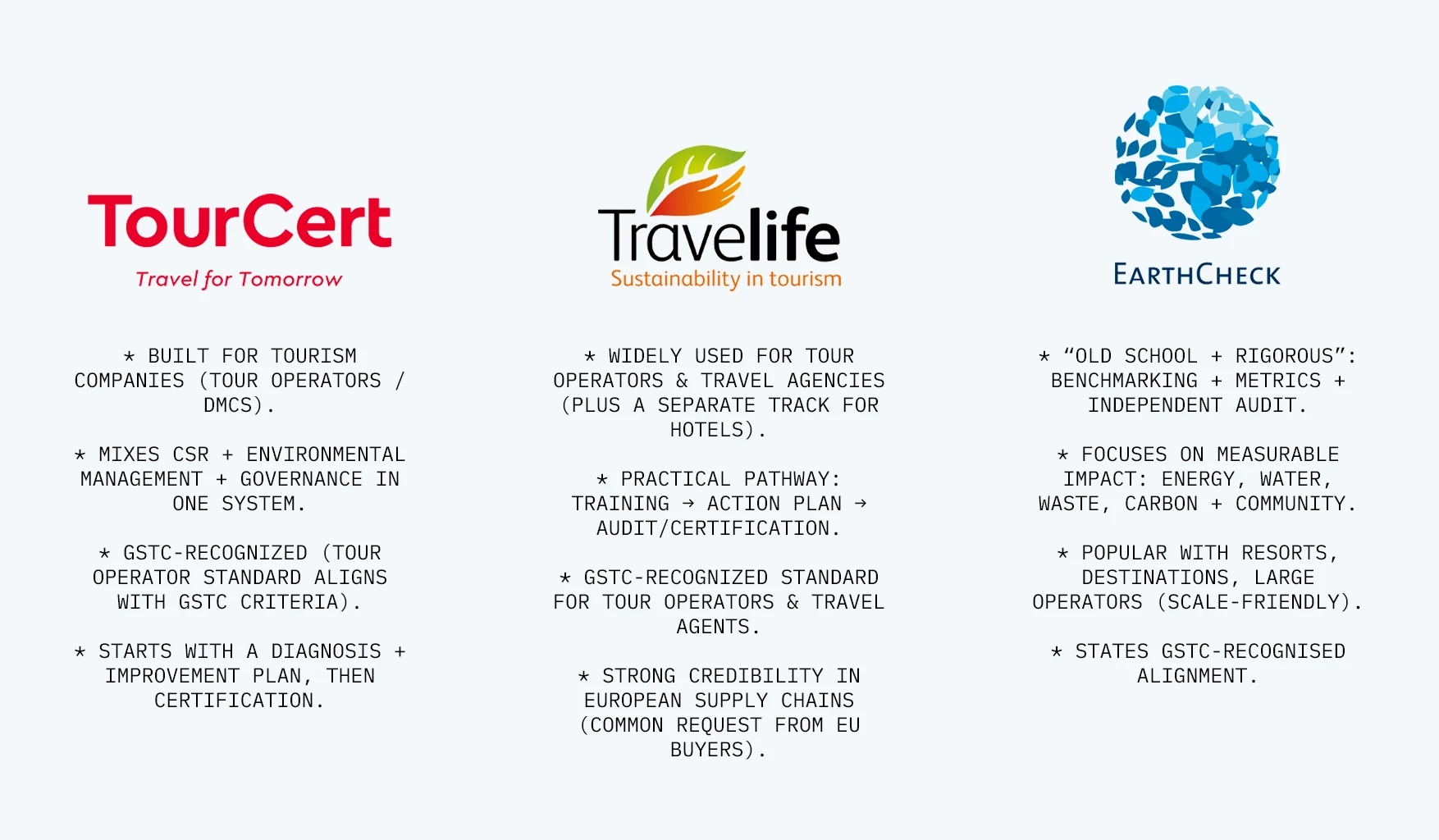
TourCert
Specially designed for tourism companies, TourCert combines social responsibility, environmental management, and governance standards. It includes diagnostics, improvement processes, and certification, and is aligned with the Global Sustainable Tourism Council (GSTC).
Travelife
An internationally recognized training, management, and certification program for hotels, tour operators, and travel agencies. Travelife provides practical tools and gradual improvement pathways, making it especially strong in European markets and widely trusted worldwide.
EarthCheck
One of the oldest and most respected global certification systems for tourism, EarthCheck focuses on rigorous benchmarking of environmental, social, and economic indicators. It is particularly strong among resorts, destinations, and large-scale operators.
How to choose the right certification?
Market alignment: for instance, Travelife has strong traction in Europe, while EarthCheck is dominant in resorts and destinations.
Type of company: DMCs and operators often choose TourCert or Travelife; resorts and destinations lean toward EarthCheck.
Level of rigor: prioritize certifications recognized by the GSTC or other international sustainability bodies.
In our case, as a DMC in Mexico, we are proud to have obtained the TourCert certification, which not only validates our current practices but also commits us to ongoing improvement in sustainability and social responsibility.
Practical Example: Applying Sustainability in a DMC Itinerary
Example itinerary: 5 days in the Yucatán Peninsula (culture + nature).
Supplier selection: work with a local transport operator using efficient fleets and certified guides.
Accommodation: partner with hotels implementing water and energy management, and sourcing locally.
Activities: replace a mass-market show with a community-based artisan encounter.
Carbon management: estimate group emissions and offer compensation via a verified community project.
Communication: pre-trip guidelines + post-trip impact report for clients.
Expected outcome: reduced footprint per traveler, increased direct income to the community, enriched guest experience, and documentation for certification processes.
Common Challenges and How to Overcome Them
Initial costs: start with low-cost/high-impact actions (local sourcing, education, waste reduction).
Internal resistance: train with data and success stories; measure and share positive results.
Greenwashing risks: avoid vague promises; publish transparent KPIs and reports.
Scalability: start small with pilot projects, then replicate and expand.
Measuring Impact: What to Track and Report
Operational indicators: energy use per guest, liters of water per night, kg of waste per guest, CO₂ per itinerary, % of local suppliers.
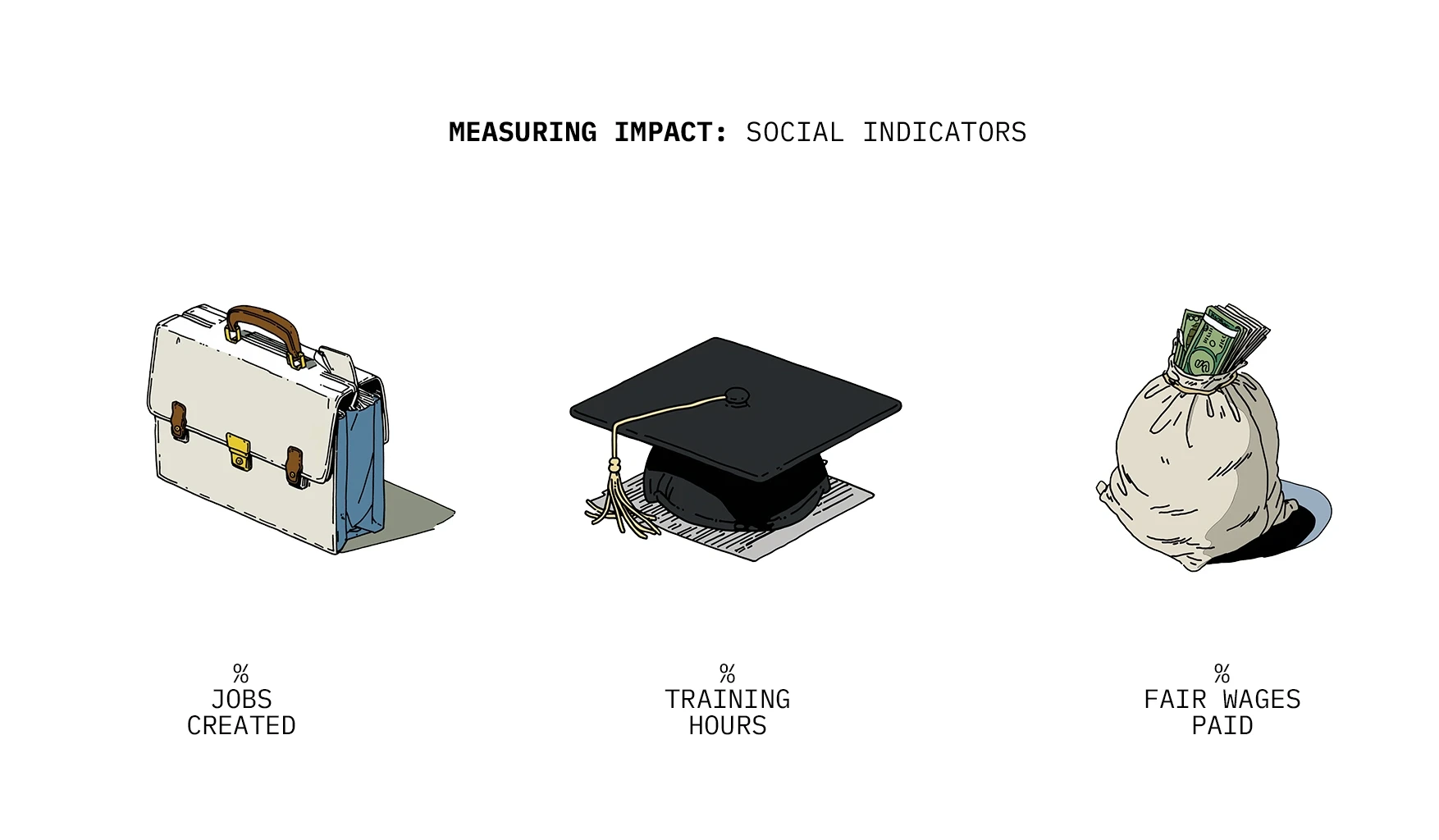
Social indicators: jobs created, fair wages paid, training hours, direct payments to communities.
Reporting recommendation: publish a concise annual impact report (2–4 pages) with year-over-year data and testimonials from clients and communities.
Our Certifications: TourCert and Travelife
At SAT Mexico, we are proud to be certified by both TourCert and Travelife, two of the most respected sustainability and corporate responsibility standards in the global tourism industry.
These certifications demonstrate our ongoing commitment to operate transparently, respect local communities, and minimize our environmental impact while providing world-class travel experiences.
TourCert validates that our management and operations meet international standards in social responsibility and sustainability, while promoting continuous improvement.
Travelife reinforces our dedication through structured training, performance monitoring, and measurable sustainability goals, recognized by the Global Sustainable Tourism Council (GSTC).
Together, these certifications ensure that our partners, clients, and communities can trust that every journey we design is guided by responsible principles, from supplier selection to traveler experience.
Travel with Purpose, Leave a Positive Impact
Sustainability is more than a goal, it’s a commitment we make to the communities, cultures, and environments we touch. At Sat Mexico, our TourCert certification reflects our dedication to responsible tourism, continuous improvement, and transparent practices. Join us in discovering the wonders of Mexico in a way that preserves its beauty, empowers its people, and creates meaningful experiences. Travel consciously, make a difference, and be part of the change today.