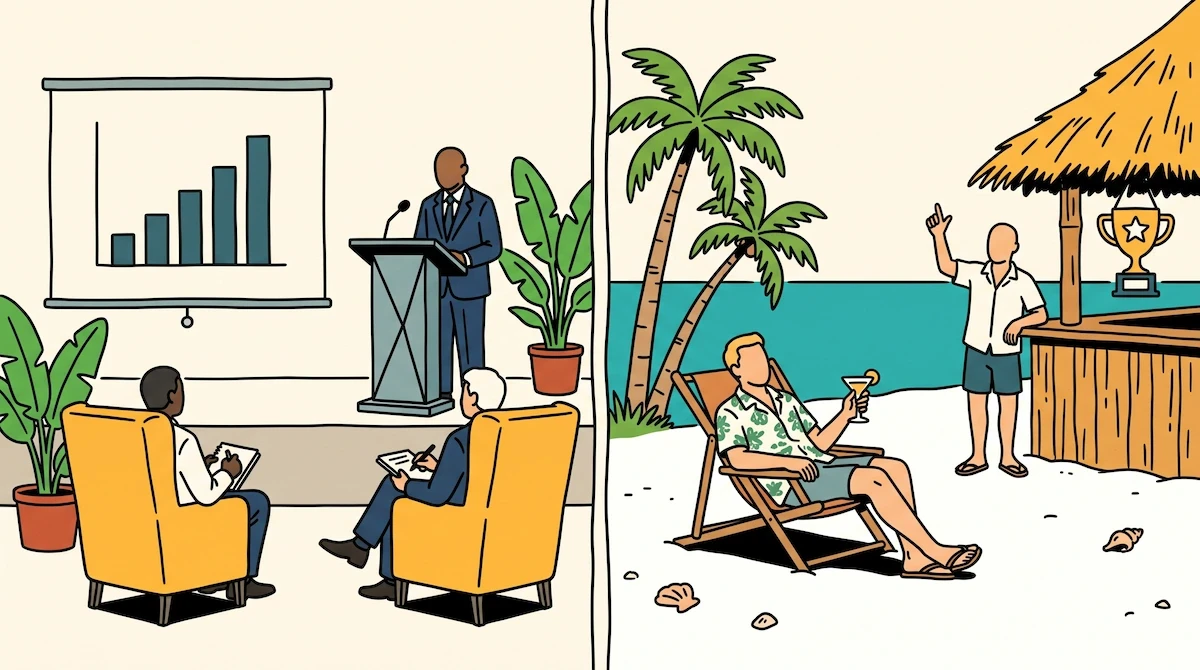
Incentive travel is undergoing one of the most significant transformations in its history. Once viewed primarily as a high-end reward reserved for top performers, it has evolved into a strategic lever used by organizations to influence behavior, reinforce corporate culture, and drive measurable business outcomes. As companies look toward 2026 and beyond, corporate buyers are no longer evaluating incentive travel based solely on destination appeal or perceived luxury. Instead, they are assessing how well these programs align with broader organizational goals, values, and long-term strategies.
This evolution is happening against a complex global backdrop. Hybrid and remote work environments have permanently altered how teams connect. The workforce is more multigenerational than ever, bringing diverse expectations and motivations. ESG commitments are under closer scrutiny by investors, employees, and clients alike. At the same time, economic uncertainty has increased pressure on budgets, forcing decision-makers to justify every investment with clarity and confidence.
Within this context, incentive travel is no longer a discretionary expense, it is a strategic tool. Corporate buyers now expect programs that deliver emotional impact, measurable ROI, responsible practices, and long-term value. The future of incentive travel sits firmly at the intersection of experience design, data intelligence, purpose-driven strategy, and human connection.
From Luxury to Meaningful, Intentional Experiences
Luxury will always remain part of incentive travel, but its definition is changing. In the past, luxury was often expressed through excess: lavish properties, over-the-top events, and tightly packed itineraries designed to impress. Today’s corporate buyers are moving away from this model in favor of experiences that feel intentional, refined, and deeply meaningful.
What differentiates a successful incentive program in the coming years is not how extravagant it appears, but how thoughtfully it is designed. Buyers are seeking experiences that reflect corporate identity and values, while offering participants a sense of exclusivity rooted in authenticity rather than display. Privacy, access, personalization, and storytelling are replacing spectacle as the new markers of luxury.
Participants want to feel recognized as individuals, not simply rewarded as a group. They want time to absorb the destination, moments that foster genuine connection, and experiences that resonate emotionally. In this sense, incentive travel is becoming less about what participants receive and more about what they feel and remember long after the program concludes.

Sustainability as a Baseline, Not a Differentiator
Sustainability has firmly transitioned from a marketing advantage to a baseline expectation. By 2026, corporate buyers assume that incentive travel programs will integrate responsible practices as a matter of course. The question is no longer whether sustainability should be included, but how effectively and transparently it is implemented.
Buyers are increasingly aware of greenwashing and are demanding credible, measurable actions rather than symbolic gestures. Sustainability must be embedded into the planning process, from destination selection and supplier sourcing to on-site execution and post-event reporting. Programs are expected to demonstrate responsibility without compromising the quality of the participant experience.
Corporate buyers consistently expect incentive programs to address two fundamental areas:
Tangible actions that reduce environmental impact, such as minimizing waste, eliminating single-use plastics, and prioritizing local sourcing.
Clear measurement and reporting that allow sustainability outcomes to be communicated internally and externally with confidence.
Sustainability has become inseparable from reputation management. Incentive travel programs that fail to meet these expectations risk undermining corporate credibility, while those that succeed strengthen trust among stakeholders and participants alike.
The Shift Toward Measurable ROI and Accountability
One of the most defining characteristics of the future of incentive travel is the demand for accountability. Emotional impact remains essential, but it is no longer sufficient on its own. Corporate buyers are under pressure to demonstrate how incentive programs contribute to tangible business outcomes.
Incentive travel is increasingly evaluated through a combination of qualitative and quantitative metrics. Engagement levels, participation rates, retention indicators, performance improvement, and post-program sentiment are all part of a more sophisticated evaluation framework. Buyers want to understand not only whether participants enjoyed the experience, but whether it influenced behavior, loyalty, and alignment with corporate goals.
This shift has elevated incentive travel into the realm of strategic investment. Programs are expected to be designed with clear objectives from the outset, supported by data collection before, during, and after the experience. Reporting is no longer an afterthought, it is an integral component of program success.

Personalization at Scale in a Diverse Workforce
As workforces become more diverse, personalization has emerged as a central expectation in incentive travel design. Corporate buyers recognize that a single program must resonate with participants across different generations, cultures, and professional backgrounds.
Personalization is no longer limited to surface-level details. It now encompasses how experiences are structured, how time is allocated, and how choice is incorporated into the program. Participants value the ability to engage in ways that feel authentic to their interests and needs, while still being part of a shared collective experience.
Achieving this balance requires thoughtful planning and the intelligent use of technology. Digital tools allow buyers and organizers to gather preferences, track engagement, and adapt experiences without adding operational complexity. The result is incentive travel that feels curated rather than standardized.
Wellness as a Strategic Component of Incentive Design
Wellness has become a defining theme across corporate strategy, and incentive travel is no exception. Burnout, stress, and mental fatigue are now recognized as critical challenges affecting performance and retention. Corporate buyers increasingly expect incentive programs to support well-being rather than contribute to exhaustion.
The future of incentive travel emphasizes balance. This includes realistic pacing, access to nature, opportunities for reflection, and experiences that promote physical and mental restoration. Wellness is no longer positioned as a niche offering, but as a core element of program design.
Rather than filling every moment with activity, buyers are embracing the value of space, space to connect, to recharge, and to fully engage with the experience. Incentive travel is expected to leave participants feeling energized and valued, reinforcing its role as a positive force within the organization.
Authentic Cultural Engagement and Destination Stewardship
Corporate buyers are also redefining how incentive travel interacts with destinations. There is a growing emphasis on authenticity, respect, and long-term impact. Superficial cultural performances are giving way to experiences that foster genuine understanding and appreciation.
Buyers expect programs to engage local communities responsibly, highlight cultural heritage with sensitivity, and contribute positively to the destination. Authentic engagement enhances the participant experience while aligning incentive travel with responsible tourism principles.
This approach also reflects a broader shift toward destination stewardship. Corporate buyers are increasingly mindful of the footprint their programs leave behind and are seeking partners who understand how to balance access with preservation.
Risk Management and the Value of Local Expertise
In an unpredictable global environment, risk management has become a critical priority for corporate buyers. Health considerations, geopolitical uncertainty, climate-related disruptions, and operational challenges all factor into decision-making.
Buyers expect incentive travel partners to provide proactive risk mitigation, clear communication, and robust contingency planning. Duty of care is no longer limited to insurance policies; it encompasses on-the-ground support, regulatory compliance, and the ability to respond swiftly to changing circumstances.
Local expertise plays a decisive role in this context. Experienced local DMCs offer insight, relationships, and operational agility that global planners alone cannot replicate. For many corporate buyers, partnering with trusted local experts is a strategic safeguard that protects both participants and brand reputation.

From Case Study: Energetix Germany - Incentive Travel
Incentive Travel as a Tool for Culture and Leadership Alignment
Looking ahead, incentive travel is being used more deliberately as a platform to reinforce corporate culture and leadership alignment. In a world where teams are often dispersed across geographies, shared experiences have become increasingly valuable.
Corporate buyers are designing incentive programs that communicate values, celebrate achievement, and create moments of collective meaning. These experiences help bridge cultural and organizational gaps, fostering a sense of belonging that extends beyond the duration of the trip.
Incentive travel is also emerging as a powerful leadership tool. Executives use these programs to connect with top performers, communicate vision, and reinforce strategic priorities in an experiential setting that feels authentic and memorable.
Destination Strategy and the Search for Differentiation
Destination choice is becoming a strategic decision rather than a logistical one. While traditional incentive destinations continue to hold appeal, corporate buyers are increasingly drawn to destinations that offer depth, diversity, and differentiation.
Mexico exemplifies this evolution. Its ability to combine world-class hospitality, rich cultural heritage, diverse landscapes, and a growing focus on sustainability positions it as a leading incentive destination for the future. Buyers value destinations that allow them to design programs blending luxury with authenticity, efficiency with discovery.
As buyers look beyond familiar options, destination strategy becomes a key element of experience design, one that can significantly influence participant perception and program success.
The Intentional Future of Incentive Travel
The future of incentive travel is defined by intention, responsibility, and human connection. Corporate buyers in 2026 and beyond expect programs that go beyond reward to deliver measurable business impact, emotional resonance, and ethical integrity.
Incentive travel is no longer about excess or spectacle. It is about thoughtful design, strategic alignment, and experiences that reflect who organizations are and what they stand for. Programs that succeed will be those that recognize incentive travel as a powerful catalyst for culture, loyalty, and long-term value.
As expectations continue to evolve, incentive travel offers a unique opportunity: to create experiences that not only motivate performance, but inspire people, strengthen organizations, and leave a positive legacy, for participants, companies, and destinations alike.