

International corporate events are no longer planned with logistics alone in mind. Today, companies must think beyond hotel bookings, transportation schedules, and gala dinners. They must think about contingency plans, traveler safety, operational continuity, cultural awareness, supplier reliability, and brand reputation. Here, we explain why working with a local DMC in Mexico is a risk management strategy.
For organizations planning meetings, incentive programs, executive retreats, conferences, or corporate events in Mexico, one of the most important strategic decisions happens long before guests arrive at the destination: choosing the right local DMC.
A local Destination Management Company is often viewed as a logistical partner, a team responsible for arranging accommodations, coordinating transportation, or organizing activities. But in reality, an experienced DMC provides something far more valuable: local intelligence, operational protection, and the ability to anticipate problems before they affect the guest experience.
When international companies bring executives, clients, employees, or partners into another country, they are not simply organizing an event. They are protecting investments, reputations, timelines, and people.
What Is a Local DMC and What Do They Actually Do?
The term “DMC” is often used broadly within the travel and events industry, yet many companies underestimate the true scope of what a Destination Management Company provides.
A local DMC acts as the operational backbone of a corporate event or travel program within a specific destination. Unlike traditional travel agencies that primarily handle bookings or event planners who focus on design and programming, a DMC integrates logistics, local supplier management, guest experience coordination, crisis response, and on-site execution into one cohesive operation.
A local DMC serves as the direct bridge between a client’s expectations and the realities of operating within the destination itself. They understand not only where to host an event, but also how transportation flows in each city, which venues have the most reliable operations, how local regulations affect production schedules, which suppliers consistently perform under pressure, and how to navigate unexpected challenges without disrupting the guest experience.
Most importantly, they provide real-time support.
No amount of online research can replace the value of having a trusted local team physically present in the destination, especially when timelines shift, flights are delayed, weather changes unexpectedly, or operational issues arise during a live corporate event.

Mexico’s Unique Travel Landscape Requires Local Expertise
Mexico is one of the most extraordinary destinations in the world for corporate and incentive travel. It offers world-class hospitality, rich cultural experiences, stunning natural landscapes, luxury resorts, modern convention infrastructure, and unparalleled diversity.
But that same diversity also creates operational complexity.
Planning an executive retreat in Los Cabos is vastly different from organizing an incentive program in Riviera Maya, a conference in Mexico City, or a luxury cultural event in Oaxaca or San Miguel de Allende. Every destination functions differently.
Infrastructure standards vary by region. Transportation timing can fluctuate significantly. Weather conditions differ dramatically between coasts and seasons. Vendor capabilities are not universal across destinations. Even communication styles and business practices can vary from one region to another.
A local DMC understands how each destination operates in practice, not just in theory. They know which suppliers consistently deliver high-quality service, which venues perform well for corporate groups, which seasons require additional planning considerations, and how to proactively avoid operational bottlenecks.
In Mexico, local expertise is not simply helpful; it is operationally essential.
Especially for companies bringing international attendees into the country, where expectations are high, and margins for error are small.
How a Local DMC Reduces Operational Risk
Corporate events involve countless moving parts operating simultaneously. Flights, arrivals, accommodations, production schedules, activities, catering, entertainment, transportation, staffing, and guest communications must all function together seamlessly.
The larger the program, the more vulnerable it becomes to operational disruption.
One delayed vendor, one transportation issue, one miscommunication, or one poorly managed timeline can create cascading effects across the entire experience.
A local DMC helps minimize these risks through preparation, coordination, and real-time oversight.
One of the greatest advantages of working with an established local DMC in Mexico is access to trusted supplier networks. Experienced DMCs spend years building relationships with reliable hotels, transportation companies, production teams, guides, venues, and operational partners.
These relationships matter.
In high-demand seasons, trusted DMC partners often receive priority support, better communication, and faster problem resolution from local suppliers. When unexpected issues arise, established relationships can mean the difference between finding an immediate solution and facing significant delays.
Equally important is the ability to manage crises in real time.
A local DMC provides immediate on-the-ground response. This protects not only the event itself, but also the client’s reputation.

Safety and Duty of Care: A Critical Responsibility
For modern corporations, traveler safety is no longer a secondary consideration. It is a core responsibility.
Companies today operate under increasing expectations regarding duty of care the obligation to protect employees, executives, clients, and attendees during business travel and corporate events.
And while Mexico remains one of the world’s leading destinations for tourism and international meetings, global perceptions about safety can often be oversimplified or misunderstood.
The reality is that Mexico is an incredibly diverse country, and safety conditions vary significantly between destinations, neighborhoods, and travel environments. Generalized assumptions rarely reflect the operational realities on the ground.
This is precisely why local guidance matters.
A local DMC understands which areas are ideal for corporate groups, which routes are most efficient and secure, how to coordinate transportation safely, and how to structure itineraries that prioritize both comfort and operational control.
They stay informed about weather developments, transportation issues, local events, demonstrations, infrastructure changes, and any circumstances that could potentially affect guest experience or safety.
A well-prepared local DMC helps organizations reduce uncertainty while providing travelers with confidence and peace of mind.
Cultural Intelligence Minimizes Reputation Risk
Corporate events are not only logistical operations, but they are also cultural experiences.
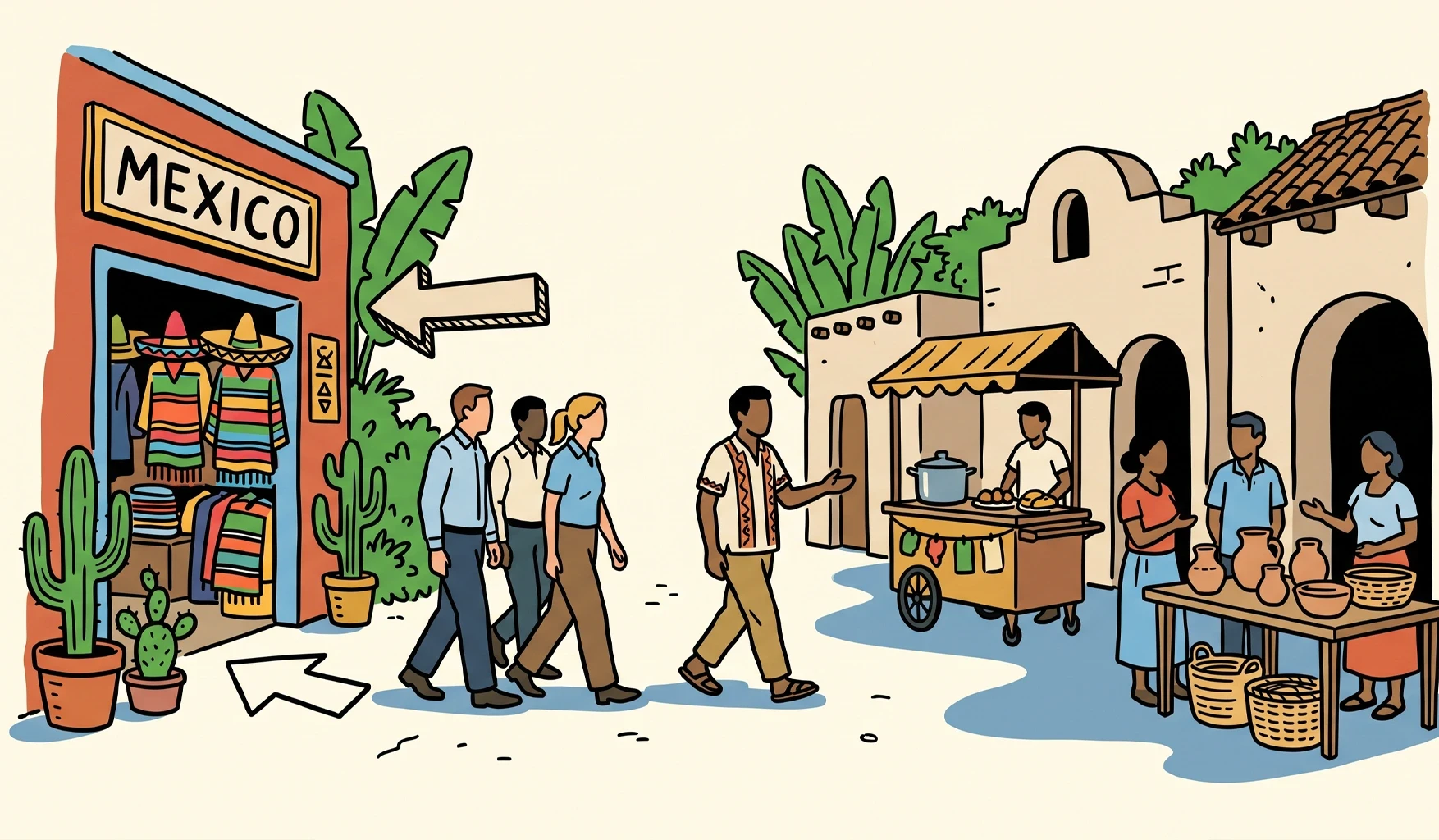
International companies entering Mexico are engaging with local communities, suppliers, hospitality teams, traditions, and business environments that may differ significantly from those in their home countries.
A local DMC understands the nuances that influence successful interaction within the destination. They know how local negotiations are typically handled, how timelines function operationally, how regional hospitality styles differ, and how to create experiences that feel authentic rather than superficial.
These details may appear small, but they have an enormous impact on guest perception.
Today’s corporate travelers increasingly value authenticity, sustainability, and meaningful cultural connections; they want experiences that feel genuine and responsibly designed. Local DMCs help companies achieve this balance.
Financial Risk Reduction: Protecting More Than Budgets
Many companies initially evaluate a DMC primarily through the lens of cost.
But experienced organizations understand that the true financial value of a local DMC lies in risk prevention.
Poor planning is expensive.
Unexpected operational changes, unreliable vendors, inefficient routing, last-minute transportation issues, production delays, communication failures, and scheduling errors can quickly create financial consequences far greater than the perceived savings of remote coordination.
Additionally, established local DMCs frequently have stronger negotiating power due to long-standing supplier relationships. This can result in:
Preferred pricing
Better contractual flexibility
Priority access during high-demand periods
Faster problem resolution
Enhanced service support
More importantly, local DMCs help companies avoid costly failures.
When execution fails, the consequences extend far beyond logistics.
Guest dissatisfaction, operational confusion, safety concerns, or poorly managed experiences can damage trust, weaken brand perception, and reduce the overall return on investment.
That is why risk management in corporate events is not merely about avoiding emergencies. It is about protecting the strategic purpose of the program itself.
Why Local DMCs Matter Even More for Corporate and Incentive Travel
Corporate and incentive travel programs operate under uniquely high expectations.
Unlike leisure travel, these experiences often involve executives, high-performing employees, investors, partners, or VIP clients whose time is extremely valuable and whose expectations are exceptionally high.
There is very little room for operational error.
Transportation delays, communication breakdowns, disorganized arrivals, inconsistent service, or poorly coordinated schedules can immediately affect how attendees perceive both the event and the company behind it.
This is especially important in Mexico, where many corporate programs combine multiple elements simultaneously:
Luxury accommodations
Meetings and conferences
Cultural activities
Team-building experiences
Gala dinners
Off-site excursions
Production and entertainment
Executive hospitality
Managing these layers successfully requires deep local coordination.
A local DMC acts as the central operational hub connecting every component of the program. They oversee vendor communication, guest movement, staffing coordination, timing management, production logistics, and on-site troubleshooting.
For incentive travel programs specifically, emotional impact also matters.
These trips are designed to inspire, reward, and strengthen loyalty. Guests expect elevated experiences that feel effortless and exclusive.
But truly seamless luxury experiences are rarely effortless behind the scenes.
They require meticulous operational planning, backup systems, supplier oversight, and real-time coordination, all areas where local DMC expertise becomes essential.
In many cases, the success of a corporate event is judged not by the absence of challenges, but by whether guests ever notice those challenges occurring at all.
And that invisible layer of operational control is precisely what experienced local DMCs provide.

Questions Companies Should Ask Before Hiring a DMC in Mexico
Not all DMCs operate at the same level of experience, operational depth, or local expertise.
Some of the most important questions include:
Is the DMC locally based in Mexico?
How long have they operated within the destination?
What regions and destinations do they specialize in?
How do they manage emergencies or last-minute operational changes?
What contingency plans do they typically prepare?
How do they vet and manage suppliers?
Do they provide on-site staffing and real-time coordination?
How do they support international corporate clients?
What experience do they have with executive groups or large-scale events?
How do they integrate sustainability and responsible tourism practices?
The answers to these questions often reveal far more about a DMC’s value than pricing alone.
The right DMC becomes more than a vendor. They become a strategic extension of the client’s own team.
Local Expertise Is No Longer Optional, It’s Strategic
Mexico continues to grow as one of the world’s most compelling destinations for corporate events, incentive travel, executive retreats, and international meetings.
Its cultural richness, luxury hospitality, natural beauty, and diversity of experiences create extraordinary opportunities for organizations seeking meaningful and memorable programs.
But successful corporate events in Mexico require more than beautiful destinations and ambitious ideas.
They require operational precision, local intelligence, cultural understanding, supplier management, and real-time problem-solving.
A local DMC provides far more than convenience. Because the true success of a corporate event is not only measured by how extraordinary it feels when everything goes right. It is also measured by how effectively challenges are prevented long before guests ever notice them.

